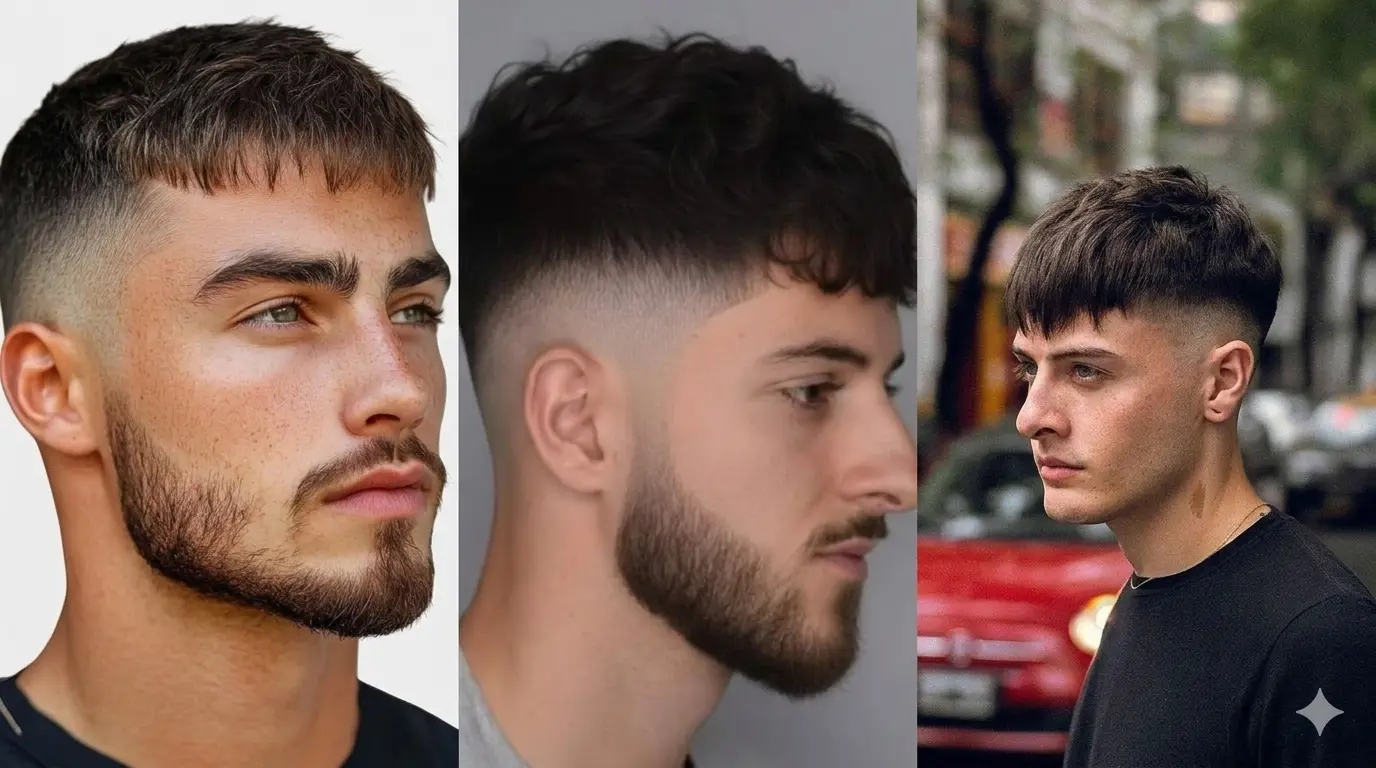
Introduction: The Reign of the Effortless Gentleman
If we analyze the trajectory of men’s grooming over the last five years, a clear pattern emerges. Men are universally abandoning high-maintenance, product-heavy hairstyles that require twenty minutes of blow-drying every morning. In the fast-paced, high-stakes environment of 2026, time is the ultimate luxury. The modern man demands a haircut that looks architecturally sharp in the boardroom, effortlessly cool at the gym, and requires virtually zero effort to style. The undisputed champion that meets all these criteria is the French crop.
Unlike the slicked-back pompadours of the past that demanded a fistful of heavy gel, or the chaotic grunge styles that looked perpetually untidy, this haircut strikes the perfect balance. It is a masterclass in controlled texture. By combining surgical, skin-tight sides with a heavier, forward-swept top, the French crop delivers a highly masculine, geometric silhouette that flatters almost every head shape.
But its appeal goes far beyond just looking good. It is the ultimate strategic haircut. Whether you are dealing with thinning hair, a prominent forehead, or simply want to stay ahead of the curve in mens haircuts 2026, this style is your greatest ally. In this comprehensive guide, we will deconstruct the anatomy of the cut, explore its powerful variations, and reveal the styling secrets that master barbers use.
Industry Pulse: The shift towards highly textured, precision-faded cuts has created a massive demand for elite barbers. Premium grooming lounges like The Salon Company are aggressively recruiting specialists who can execute this exact look perfectly. (Pro Tip: If your clipper work is flawless, find the highest-paying barber jobs on the Stylelink app today).
The Anatomy: Deconstructing the French Crop
To ask your barber for the right cut, you must understand its DNA. What exactly separates a French crop from a standard crew cut or a Caesar cut? It relies on three non-negotiable structural pillars:
1. The Forward Fringe
This is the signature element. All the hair from the crown of the head is combed strictly forward toward the face, culminating in a fringe (bangs) that rests on the upper forehead. Unlike the Caesar cut (which has a very short, blunt, uniform fringe) or the Edgar cut (which features a severe, straight horizontal line), the fringe in a French crop is slightly longer, softer, and heavily point-cut to create a jagged, natural finish.
2. The High Contrast Sides
To prevent the cut from looking like a “mushroom” or a bowl cut, the sides and back must be taken extremely short. This is usually achieved through a high or mid skin fade. This severe contrast between the bald sides and the heavy top creates the sharp, modern aesthetic.
3. The Internal Texture
The top is never cut in a flat, blunt layer. The barber must use advanced texturizing techniques (like slide cutting or deep point cutting) to remove bulk from the inside of the hair. This allows the hair to separate into distinct, chunky pieces, creating a chaotic, “lived-in” movement.
The Ultimate Solution for Hair Loss
Let’s talk about the unspoken reason this haircut is so wildly popular. As men age, the hairline naturally retreats at the temples, creating a “V” or “M” shape. When guys try to comb their hair backward or part it to the side, it acts as a neon sign pointing directly to their receding corners.
The French crop is undisputedly the champion of receding hairline styles. Because all the hair from the dense crown is brushed entirely forward, it acts as a canopy, completely covering and camouflaging the receding temples. Furthermore, the messy, chaotic texture on top confuses the eye, making it incredibly difficult for anyone to pinpoint where your actual hairline begins. By fading the sides down to the skin, you also reduce the visual contrast, making the hair on top appear significantly thicker and darker.
Top 4 Variations Dominating Mens Haircuts 2026
The beauty of this style is its adaptability. Here are the leading variations you will see in top-tier salons this year:
1. The Textured Crop Fade
The absolute standard for 2026. The textured crop fade combines a surgical mid-to-high skin fade on the sides with roughly 2 to 3 inches of heavily chopped hair on top. It is the perfect balance of aggressive barbering and casual, messy styling.
2. The Long Fringe Crop
For men who want a bit more drama. The fade remains tight, but the fringe is left long enough to graze the eyebrows. It adds a moody, artistic vibe to the look, heavily favored by musicians and creatives.
3. The Curly Crop
If you have naturally curly or wavy Indian hair, this is a phenomenal choice. The fade removes the unmanageable bulk from the sides (preventing the “helmet” look), while the curls are allowed to drop naturally over the forehead. It requires zero styling powder—just a good leave-in conditioner.
4. The Disconnected Crop
A highly edgy variation where there is no fade or blending at all. The sides are buzzed to a uniform #1 guard, creating a harsh, disconnected line where the long top hair meets the shaved sides. It is a fierce, statement-making look.
The Danger of the “Bowl Cut”: Why You Need The Salon Company
Do not be fooled by its messy appearance—a French crop requires extreme architectural precision. If a cheap barber simply cuts the front of your hair in a straight line and fails to remove the internal weight from the top, you will walk out looking like you have a medieval bowl cut.
We strongly recommend booking your transformation with the master barbers at The Salon Company. As a flagship luxury brand within the Stylelink ecosystem, their professionals are trained in advanced cranial geometry:
- Internal De-Bulking: They use advanced slicing and point-cutting techniques to remove the heavy weight from thick Indian hair, ensuring the top is light, airy, and full of movement.
- Flawless Fades: They utilize foil shavers to create a buttery smooth gradient on the sides, ensuring the fade looks like a shadow rather than a harsh step.
- Face Shape Customization: They analyze your bone structure. If you have a round face, they will keep the fade higher to elongate your head; if you have a long face, they will drop the fade to add width.
Career Spotlight: Capitalizing on the Texture Trend
Are you a barber or men’s grooming specialist? The era of simple clipper cuts is over. Modern clients are bringing in TikTok videos of complex textured crop fade styles, and they expect you to replicate them perfectly. Mastering scissor-over-comb techniques and aggressive texturizing is your ticket to a high-income career.
Here is how the Stylelink ecosystem elevates your professional trajectory:
- Unlock Premium Roles: Stop accepting low-paying walk-ins. Download the Stylelink App to find specialized vacancies at luxury grooming lounges like The Salon Company that actively seek trend-focused barbers.
- Build a Visual Empire: Use Stylelink’s Resume & Portfolio Builder. Upload macro shots of your blurry skin fades and the sharp texture of your crops. Visual proof is the fastest way to justify higher commission rates to elite employers.
- Lock In Recurring Revenue: Because a high skin fade grows out in 10 days, clients need to return every 2 weeks. If you run a shop, use Stylelink’s Salon Software (Lokaci Pro) to pre-book your clients before they leave the chair, ensuring a guaranteed, recurring income stream.
The Masterclass: Styling Your Crop in 60 Seconds
The reason this is the best low-maintenance cut is because of the styling. You do not need a comb, and you barely need a mirror. Here is your 60-second morning routine:
1. Dry It Completely
This cut looks terrible when wet. After a shower, aggressively towel-dry your hair, or use a blow dryer pointing forward from the crown toward your face. Make sure it is 100% dry.
2. The Magic of Texture Powder
Throw away your shiny gels and heavy pomades; they will clump the hair and expose your scalp. You need a Texture Powder or a dry Matte Clay. Sprinkle the powder directly into the roots of your hair.
3. The “Pinch and Scrunch”
Using just your fingertips, aggressively massage the powder into your roots to create massive lift. Then, pinch small sections of the fringe together to create those distinct, chunky, textured pieces. You are done.
Conclusion
The French crop is not just a haircut; it is a strategic grooming asset. It effortlessly masks receding hairlines, requires less than a minute of daily styling, and projects an image of sharp, modern masculinity. It is the definitive look of 2026 for a reason.
However, this architectural style requires absolute precision. Do not leave your look to chance. Book your transformation with the elite precision barbers at The Salon Company to ensure a flawless silhouette. And for the ambitious grooming professionals shaping the culture of mens haircuts 2026, Stylelink is your ultimate launchpad for building a highly successful, trend-setting career.
Frequently Asked Questions (FAQs)
Q1: Will a crop cut look good on a round face?
Yes, but you must ask your barber to keep the fade high and tight on the sides, and leave slightly more volume on top. This vertical height elongates the face, making it appear less round.
Q2: How often do I need to visit the barber?
While the top can grow out for a month and still look good messy, the skin fade on the sides will lose its sharp contrast after 10-14 days. You should visit your barber every 2 weeks for a quick side-fade touch-up.
Q3: What is the difference between a French Crop and a Caesar Cut?
The main difference is the fringe and texture. A Caesar cut has a very short, bluntly cut, uniform fringe that lies flat. The Crop has a slightly longer, highly texturized, and choppy fringe that has a lot more volume and movement.


